
A small cavity may not seem urgent, especially if it is not causing pain. However, untreated tooth decay can quickly worsen beneath the surface, leading to infections, larger fillings, root canals, severe toothache, and even tooth loss. Treating a cavity early is usually faster, less invasive, and far less expensive than waiting until symptoms become severe. This is something that I can confirm 100% as Principal Dentist at tooth, so never put off dental treatment.
Most cavities start small.
You may notice a slight sensitivity to cold drinks, a rough spot on a tooth, or perhaps nothing at all. Because early decay often causes little or no pain, many people delay treatment - sometimes for months or even years.
The problem is that cavities do not heal on their own.
Once tooth decay breaks through the enamel, it continues to spread deeper into the tooth. What could have been treated with a simple filling may eventually require a crown, root canal treatment, or extraction.
Understanding what happens when a cavity is ignored can help you avoid bigger dental problems later.
What Is a Small Cavity?
A cavity is an area of tooth decay caused by bacteria, plaque, sugar, and acid wearing down the tooth structure.
In the earliest stages, decay affects only the outer enamel layer. At this point, you may not feel any discomfort. Dentists can often spot small cavities during routine examinations or X-rays before they become painful.
Even though a cavity may look tiny from the outside, decay can continue spreading internally.
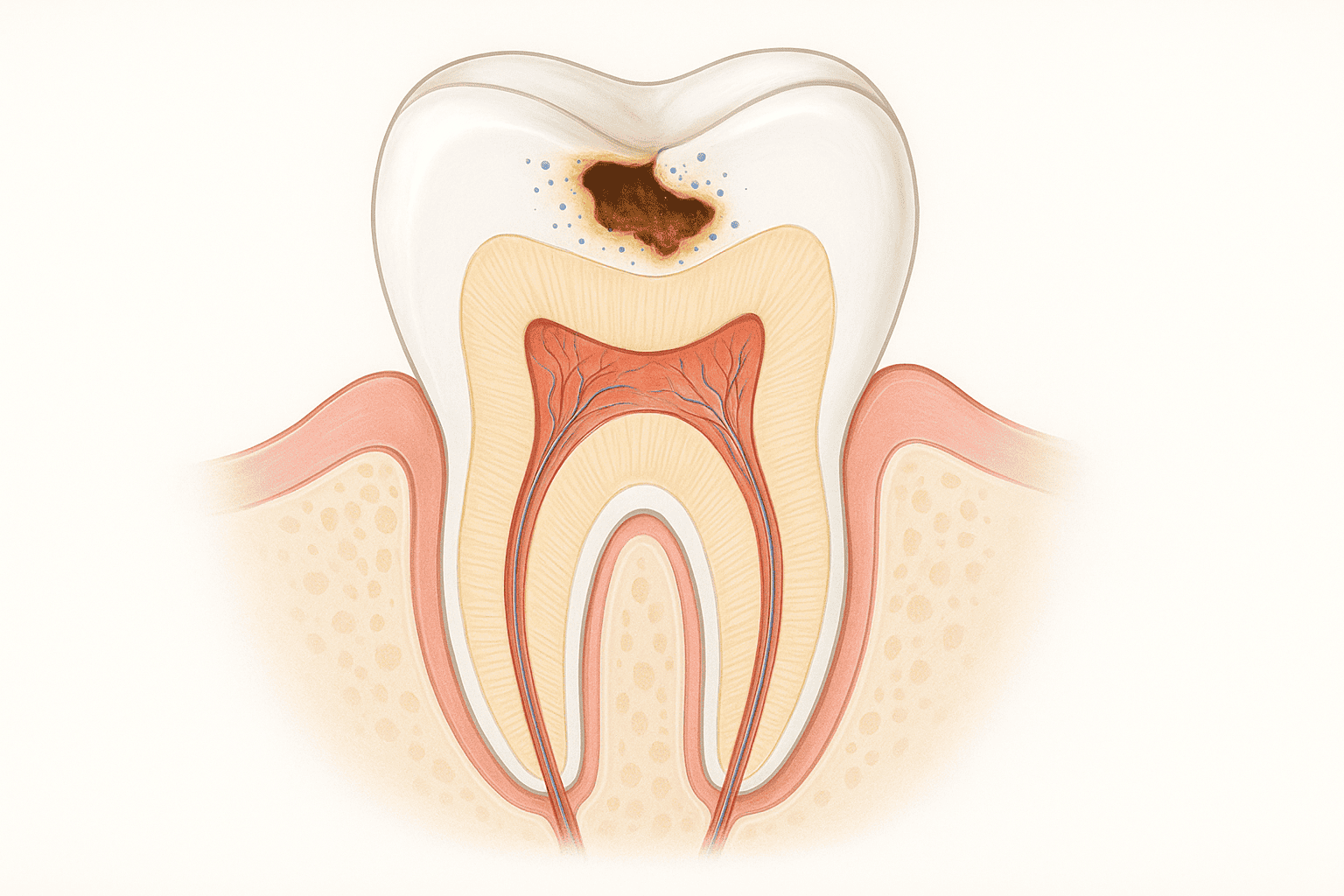
What Happens If You Leave a Cavity Untreated?
1. The decay gets deeper
Cavities do not stop progressing naturally.
As bacteria continue breaking down the tooth, the decay moves from the enamel into the softer dentin layer underneath. Because dentin is less resistant, the cavity can expand much faster at this stage.
You may begin noticing:
Sensitivity to hot or cold foods
Pain when biting
Visible dark spots or holes
Food getting trapped in the tooth
Mild but recurring toothache
At this point, treatment is usually more extensive than a small filling.
2. The Tooth Nerve Can Become Infected
If decay reaches the centre of the tooth (which is known as the pulp), bacteria can infect the nerve and blood supply.
This often causes:
Persistent tooth pain
Throbbing discomfort
Swelling around the tooth or gums
Pain that keeps you awake at night
Increased sensitivity to heat
When the nerve becomes infected, a simple filling is no longer enough.
The tooth may require root canal treatment to remove the infection and save the tooth.
3. You Could Develop a Dental Abscess
In severe cases, untreated decay can lead to a dental abscess.
An abscess is a pocket of infection that forms around the tooth root or gums. It can cause:
Severe pain
Facial swelling
Bad taste in the mouth
Fever
Difficulty chewing
Difficulty swallowing in advanced cases
Dental abscesses are serious infections that should never be ignored.
4. The Tooth May Need to Be Removed
When decay becomes too extensive, the tooth structure may no longer be strong enough to restore.
If a tooth cannot be saved safely, extraction may become the only option.
Missing teeth can affect:
Chewing
Speech
Confidence when smiling
Bite alignment
Long-term oral health
Replacing a lost tooth with implants, bridges, or dentures is typically far more expensive and time-consuming than treating a small cavity early.
Why Small Cavities Often Go Unnoticed
One of the biggest reasons people ignore cavities is because early tooth decay is often painless. Pain usually develops only after the decay reaches deeper layers of the tooth. But, super-important, you should not wait for symptoms before booking a dental appointment!
Regular dental check-ups help identify decay early, often before you notice anything yourself.
Can a Small Cavity Heal on Its Own?
Very early enamel weakening may sometimes be stabilised with fluoride treatment and excellent oral hygiene. However, once an actual hole or cavity forms in the tooth, it cannot naturally repair itself.
Professional dental treatment is needed to stop the decay from spreading and that’s where me, or my amazing team of Dentists in London can help.
How Dentists Treat Small Cavities
Early treatment is usually straightforward, and depending on the severity of the decay, treatment may include:
Small tooth-coloured fillings
Fluoride treatments
Dental sealants
Monitoring early enamel changes
Most small fillings are completed quickly and comfortably during a routine appointment.
How to Prevent Cavities From Getting Worse
The best way to avoid major dental treatment is to catch decay early.
Helpful prevention habits include:
Brushing twice daily with fluoride toothpaste
Cleaning between teeth with floss or interdental brushes
Reducing sugary snacks and drinks
Drinking plenty of water
Attending regular dental check-ups
Booking an appointment quickly if sensitivity or discomfort develops
When Should You See a Dentist?
You should arrange a dental appointment if you notice:
Tooth sensitivity
Pain when eating or drinking
Dark spots on a tooth
A visible hole or rough area
Persistent bad breath
Food trapping between teeth
Even mild symptoms can indicate deeper decay than expected.
Final Thoughts
Ignoring a small cavity rarely saves time, money, or discomfort, as what starts as a tiny area of decay can gradually become a painful infection requiring much more complex treatment.
The earlier a cavity is treated, the easier, and usually cheaper, the solution tends to be.
If you think you may have a cavity, or haven’t had a check up in more than 6 months, booking an examination could help protect your teeth, and prevent more serious problems later. At tooth, it is so easy to book a dental appointment, just click on any of the buttons below. We’re open 8am - 8pm too, so we can always find a time that works for you.
Dr. Anna x
Frequently Asked Questions
-
No. Once a cavity forms, it will usually continue to worsen unless treated professionally.
-
There is no exact timeline. Some cavities progress slowly, while others worsen quickly depending on diet, oral hygiene, and the location of the decay.
-
Not necessarily. Many small cavities cause no pain at all in the early stages.
-
Yes. Early treatment is generally simpler, less invasive, less expensive, and more comfortable.
-
No - unfortunately not. Although brushing helps prevent further decay, but it cannot reverse an actual hole in the tooth.
More FAQs here.